Falling walls and federating capacities: How best can we do this to enhance experiences of early futures researchers in global research conferences?
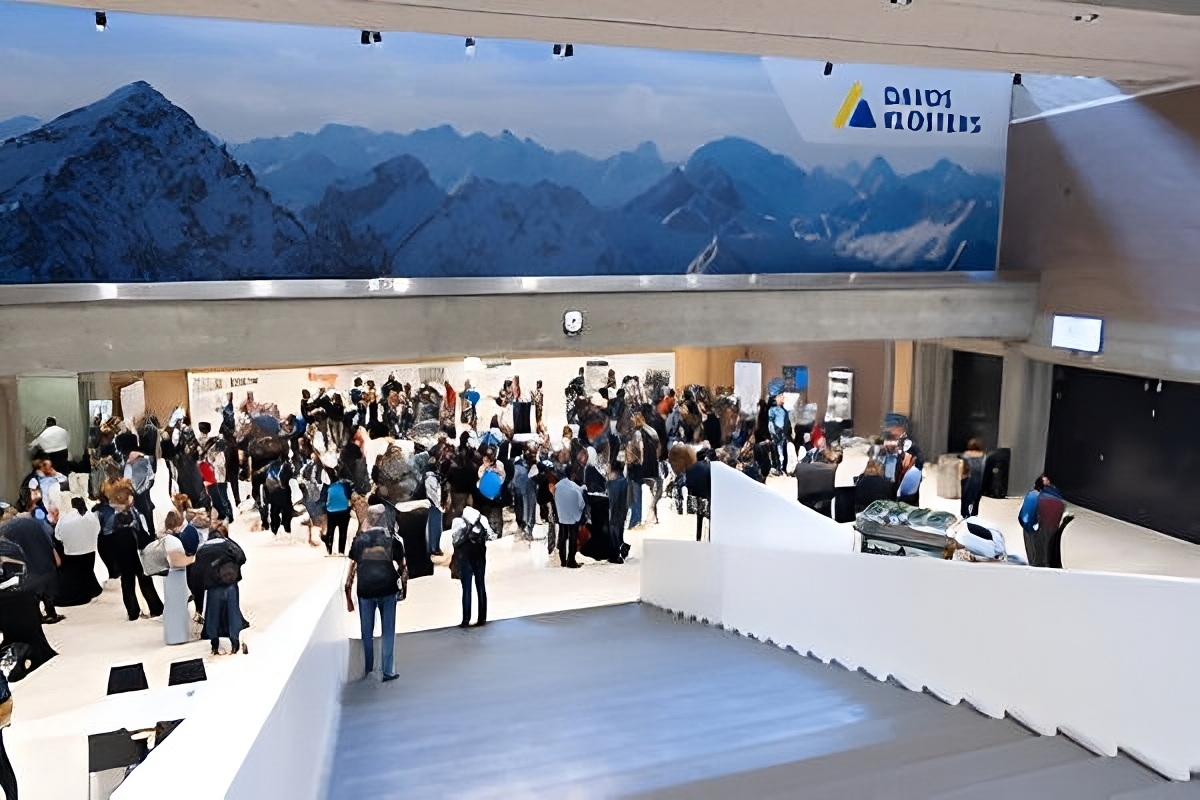
In June this year, at least 800 established and early futures researchers (EFRs), practitioners, entrepreneurs, artists, and policymakers from across 75 countries converged in Davos, Switzerland for the World Biodiversity Forum (WBF).
It was all filled with plenary sessions, oral and poster presentations, art and science. The Swiss mountains, parks, research sites, and the museum were equally great to experience. But how can we enrich these experiences for EFRs in Africa and ensure we unlock opportunities necessary to drive impact research?
The WBF, now in its third year, served to advance biodiversity research in an integrative, interdisciplinary, and transparent fashion, and to further transdisciplinary approaches to biodiversity. Unlike most research fora I have been part of, EFRs got an opportunity to not only forge new possibilities but also pursue them further through mutual collaborations and functional partnerships.
I was privileged to be among the EFRs that received Conference Grants from the Global Research Network (GRN) of Future Earth, and the University of Zurich and its Research Priority Programme on Global Change and Biodiversity to participate in this global forum.
As I was on the plane en route to Nairobi, I put to myself some questions that I want to believe every other EFR or thought leader from Africa, Asia, and the Caribbean might have asked:
How best can we achieve or improve the collective experiences of EFRs in such global research conferences, and fundamentally, mentor ourselves into global research leadership for the future?
It must not be lost on us that a lot of talented EFRs get swamped in conferences and travels, not to mention the visa and profiling challenges we go through each time we are called to present a paper, whether in Dublin, London, or Helsinki. A young colleague once shared with me how others have compared her to a conference tourist who struggles to reconcile her conference travels with her economic reality back home. Some of the EFRs no longer tell their families about their conference travels.
I will refuse the temptation to travel that space and stay with the issue of research capacity.
Enhancing the experience of EFRs is a capacity development question that is always a work in progress and should be a priority for all of us. Even so, perhaps it’s more important to explore how to sustain this capacity to ensure the gains we have made in the past and those we make each day, are safeguarded. In this piece, I provide some of the ways we can improve EFRs’ experiences, fall any walls that may be present, and even turn these into opportunities to strengthen our contribution to the fast-growing science-policy-practice interface (SPPI).
First, there should be a deliberate mechanism to ensure diversity of, equity for, and inclusion of all, placing priorities on the EFRs from countries in Africa and other regions where funding research is competing with other priorities such as the urgency to address universal healthcare, ensure food security, and reduce multidimensional poverty. One of the major proposals that has been shared by many ECRs that I interacted with at the WBF 2024 is to set aside a certain minimum threshold of opportunities exclusively for EFRs to contribute to the plenary sessions, posters, and oral presentations, and allow them to co-design the agenda in all the key programmes.
The other way is for future conveners to expand the space of participation. For example, sending a request for think pieces (RFTP) around certain themes of the conference and other side sessions. The advantage of this is that even those EFRs without the capacity to show up in person can be guaranteed an opportunity to showcase and discuss their research. This can improve their thought leadership skills and expand a shared experience on key issues around the triple challenge of biodiversity loss, climate change, and the need to ensure socio-economic transformation. Closely tied to this is to encourage the adoption of alternative ways of profiling and communicating impact research, for example, the use of visuals, art and poetry, and locally translated pieces. In the age of globalization that is enabled by infotech, there is still an opportunity to piggyback on open artificial intelligence (Open AI) and other digital tools to make future research conferences and platforms more experiential and fun for EFRs.
Third, the challenge of inadequate, not easy-to-access, and bureaucratic research funding schemes is still a major barrier for many EFRs. It is more imperative now than ever to mobilize more financial resources to allow for mini-grants way ahead of any research conference to support practical case studies by ECRs. These case studies can be designed for graduate research students across selected universities and the evidence profiled at the WBF and other related fora.
Even more critical, the experiences of EFRs in any global conference should always go beyond and back to inspire impact across various local contexts, particularly in ensuring the capacity developed and lessons learnt are reintegrated into universities, policy options, and local practices. We need to promote biennial fora and roundtable talks across different countries and regions – as part of regionally and locally driven evidence-informed initiatives that could be sustained to target gaps for whose solutions will help strengthen the SPPI. Trans-frontier collaboration that leverages regional universities as platforms to mentor and reintegrate EFRs for sustainable impact. One great case in Africa is the African Research and Universities Alliance (ARUA) Centres of Excellence which can be a good starting point.
Developing diverse and relevant research capacities is not the silver bullet to breaking barriers and unlocking vast opportunities for ECRs across the world. These capacities need to be sustained into the future. Fundamental is for us to collectively reimagine, be ready to appreciate these capacity needs change over time, and even model future capacity needs for us to be able to achieve our shared goals such as those outlined in the Convention for Biological Diversity (CBD).